
Text Krista Grönlund, Photos Janne Jänis
Plastics containing brominated flame retardants pose a major challenge for safe and efficient recycling. A recent doctoral dissertation at the University of Eastern Finland explores how direct mass spectrometry can speed up the detection of these additives and support the transition toward a more sustainable circular plastics economy.
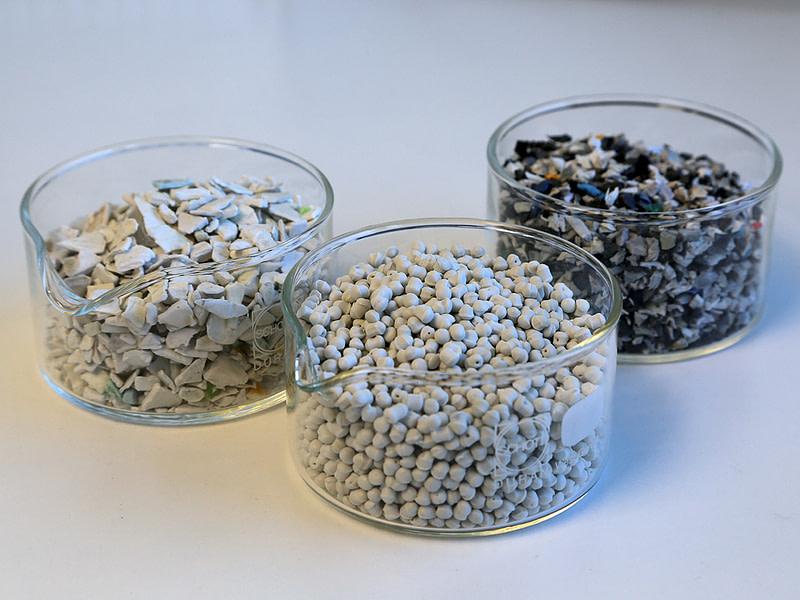
The growing challenge of plastic waste
As global plastic production keeps increasing, so does the amount of plastic waste. Mechanical recycling remains the dominant recycling method, but it struggles with mixed waste streams, unknown additives, and severe contamination.
Many consumer plastic products contain so-called legacy chemicals, which are substances that were once widely used but are now restricted due to environmental or health concerns. These compounds can persist in recycled materials, limiting their safe reuse and challenging the recycling processes.
In Europe, regulatory pressure is increasing for more controlled and traceable recycling. First, recycling actors must prove that their output meets strict safety criteria, particularly regarding persistent organic pollutants (POPs). Second, regulations such as Restriction of Hazardous Substances in Electrical and Electronic Equipment (RoHS) and Registration, Evaluation, Authorization and Restriction of Chemicals (REACH) further restrict hazardous chemicals, including many brominated flame retardants (BFRs). Meeting these requirements demands analytical methods that are both accurate and fast enough for industrial use.
A persistent problem of brominated flame retardants
Brominated flame retardants illustrate the complexity of chemical contamination. For decades, BFRs were added to electronics, textiles, insulation, and household goods to improve fire safety. Their effectiveness made them widespread but also difficult to remove from the material cycling.
Many BFRs, such as polybrominated diphenyl ethers (PBDEs) and hexabromocyclododecane (HBCD), are now classified as POPs. They are environmentally persistent, bioaccumulative, and toxic. Regulations limit their concentrations in recycled plastics to very low levels. Even small amounts of contaminated plastics can compromise the entire recycling batches.
Traditional analysis methods need an update
Conventional analysis of BFRs heavily relies on gas chromatography–mass spectrometry (GC‑MS) or liquid chromatography–mass spectrometry (LC‑MS) techniques, which both require extensive sample preparation, since the solid plastic samples need to be dissolved. Analytical results obtained from these workflows are accurate, but due to multi-step sample preparation, these methods are slow, labor‑intensive, and poorly suited for real‑time, on-site analyses.
Another common tool employed in plastic recycling industry is X-ray fluorescence (XRF). XRF is very fast and cost-efficient method which can be used for either solid or liquid samples. XRF can screen for a total bromine content, but it lacks the ability to distinguish between different BFRs. As the concentration limits vary between different BFRs, due to varying legislative statuses, XRF is not very well suited for BFR screening.
Direct mass spectrometry offers faster path forward
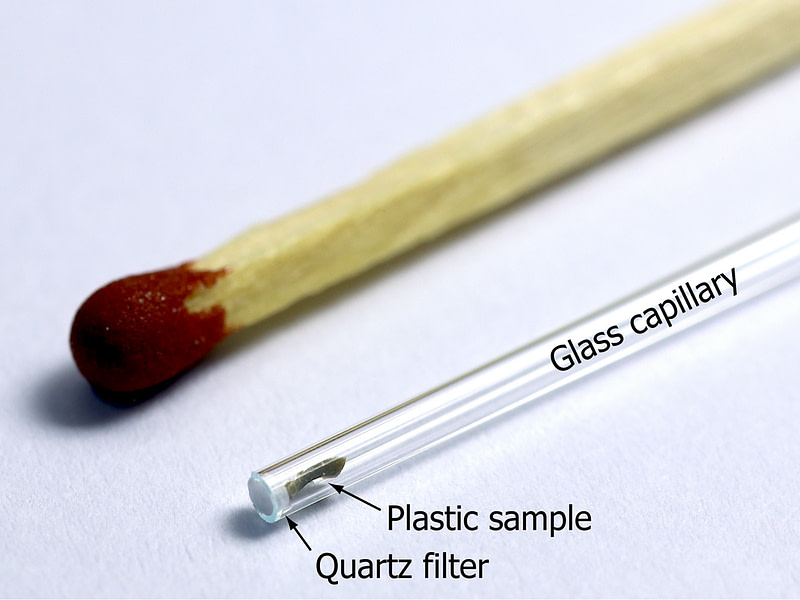
Recently, direct mass spectrometric methods have become popular for solid samples analysis, including plastics. Direct analysis in real time (DART), atmospheric solids analysis probe (ASAP) and direct insertion probe (DIP) are based on the controlled thermal desorption of the material and allow BFR analysis directly from the solid samples without any pretreatment or chromatographic separation. This represents a significant advantage over the more conventional techniques. Instead of hours of sample preparation, solid plastic samples can be analyzed within minutes.
Key findings from the dissertation
Krista Grönlund’s doctoral dissertation entitled Improving plastic recycling: Direct mass spectrometric analysis of brominated flame retardants in synthetic polymer samples, explored a new DIP-MS method for analyzing BFRs in several industrially relevant polymers, namely, high impact polystyrene (HIPS) and acrylonitrile butadiene styrene (ABS). The studied BFRs included decabromodiphenyl ether (decaBDE), tetrabromobisphenol A (TBBPA) and hexabromocyclododecane (HBCD), which are common in electronic appliances and other consumer goods.
Using the temperature‑controlled analysis at 150–450 °C, the method separated analytes based on their boiling or decomposition points. While BFRs were observed at lower temperatures (300–350 °C), the polymer fragments, identifying the polymer type itself, were detected at higher temperatures (400–450 °C). Thus, it was demonstrated that a single DIP‑MS run can temporally separate and further identify both additives and polymer fragments simultaneously, providing a fast and reliable analysis workflow.
” A new temperature‑ programmed mass spectrometry method can quickly show what a plastic sample contains.”
The method was also compared with XRF to evaluate its quantitative potential. The limits of detection (LOD) and quantification (LOQ) for all three BFRs with both polymer types were below current regulatory limits, showing that DIP‑MS method can also verify legislative compliance of a given recyclate batch.
The research also highlights the importance of concurring matrix effects. Different polymers influence the ionization efficiency and the observed fragmentation patterns, requiring careful instrument calibration and in-depth spectral interpretation.
Despite these challenges, the doctoral study shows that direct MS method can reliably identify BFRs at levels relevant to regulation, making it a promising tool for industrial-scale screening.
Implications for circular plastics economy
Fast detection of restricted additives is crucial for producing high‑quality recycled plastics. Direct mass spectrometry enables real‑time quality control, allowing recyclers to identify contaminated fractions before further processing. Because the method requires minimal sample preparation, it also reduces analytical costs and speeds up decision‑making.
”By fast chemical screening tools, recyclers quickly spot problematic plastic batches.”
Reliable identification of brominated flame retardants supports regulatory compliance and helps prevent hazardous substances from circulating and accumulating in recycled materials. With more accurate information about feedstock composition, recyclers can manage material flows more efficiently and produce higher‑value outputs.
As the plastics sector moves toward circularity, advanced analytical tools like direct MS will play an increasingly important role in ensuring both safety and sustainability of recycled plastic streams.
Future Directions
This study focused on two polymers and three BFRs, but the approach could be expanded to other flame retardants or even other additive groups such as per- and polyfluoroalkyl substances (PFAS). Developing spectral libraries tailored to polymer–additive combinations would further strengthen the method.
Achieving these goals will require collaboration between chemists, instrument manufacturers, and recycling companies to integrate direct MS based tools into industrial quality assurance routines and to improve safety and recyclability of plastics and plastic products.
Conclusion
By demonstrating the potential of direct mass spectrometry for rapid BFR detection in plastic samples, Krista Grönlund’s dissertation provides valuable insights for both analytical chemistry and sustainable materials management. As demand for high-quality recycled plastics continues to grow, such innovations will play an important role in ensuring that circularity and chemical safety progress hand in hand.

A short introduction of the writer
Krista Grönlund completed her PhD in 2025 at the University of Eastern Finland, Joensuu campus. Her doctoral dissertation entitled “Improving plastic recycling: Direct mass spectrometric analysis of brominated flame retardants in synthetic polymer samples” focused on developing a new analysis method for determining hazardous plastic additives. The research was part of the 3-year PRIMUS project, funded by the European Union (European Health and Digital Executive Agency).


