
Text Christina Jäger, Photo Neste
Leveraging science and innovative technology are key in expanding and diversifying the pool of waste and residues into renewable fuels and circular raw materials. The aim is to accelerate the transition to a circular economy and deliver solutions to reduce climate impact.
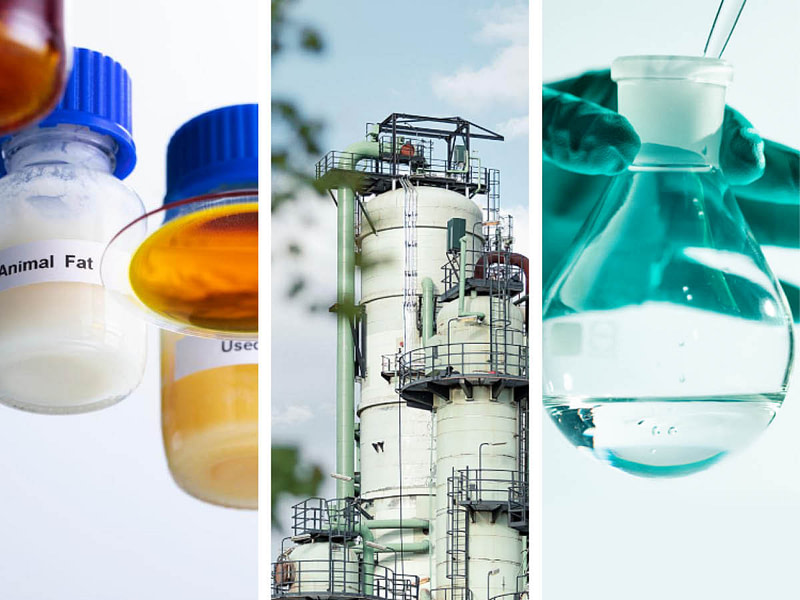
One of the most critical and complex endeavours of the 21st century is the global transition to fuels with reduced climate impact. Many technologies are already available or rapidly evolving. However, there is no silver bullet solution to solve this issue. Reducing the transport sector’s reliance on fossil resources, as it is a major contributor to global emissions, requires a multifaceted and strategic approach. The task is huge but not impossible to solve and requires multiple puzzle pieces to cover the whole picture. Therefore, innovation and collaboration is highly required to ensure the interplay of several options. This complexity necessitates an integrated approach, considering every option from advanced biofuels and e-fuels to hydrogen and electrification. Furthermore, supportive policies, regulations and investment in infrastructure are essential to accelerate the deployment of these solutions across different modes of transport, from road to air and sea as well as non-road mobile machinery.
”There is no silver bullet. Several solutions need to be considered in the future.”
Transforming a refinery
One of Neste’s climate targets is to help its customers reduce their GHG emissions with renewable and circular solutions by at least 20 MtCO2e annually by 2030. This means for example to reduce the transport sector’s reliance on fossil products by producing fuels from renewable raw materials. While Neste has dedicated renewable products refineries without any crude oil, the long-term plan is to gradually transform also the Porvoo crude oil refinery in Finland into a renewables and circular solutions refining hub.
Neste has already started modifying existing refinery units at the Porvoo oil refinery to enable co-processing of renewable and recycled feedstock alongside fossil based raw materials in the conventional refining process. With the help of co-processing in Neste’s oil refining processes, the company can produce additional volumes of products, where the product lifecycle has a reduced climate impact compared to solutions produced with fossil raw materials and that can help customers work towards their greenhouse gas (GHG) emission reduction targets.
Research focuses heavily on understanding the chemical compatibility and behaviour of various renewable and recycled resources when mixed with fossil raw materials under high-temperature and high-pressure refining conditions. This involves catalyst testing and process optimization to prevent unwanted side reactions and ensure high-quality products while scaling up the technology. Ultimately, the goal is to develop robust, flexible processing pathways capable of handling diverse feed inputs at an industrial scale.
Fats, oils, waste & residues
In the future, we will be needing the ability to utilize a variety of renewable waste and residue based raw materials for our production. With this in mind, the refining techniques have to be flexible as well and not dependent on one single renewable resource. Flexibility and adjustment to market situations is a highly desired goal. While working on further possibilities of co-processing and beyond, research on expanding the feedstock portfolio of waste and residue raw materials, including smaller amounts of renewable fats and oils from regenerative agricultural practices, is crucial. We are working to valorize various waste and residue-based streams as new, scalable raw materials. This includes utilizing hard-to-recycle waste plastics to refine base materials for the petrochemical industry or waste and residues from existing forest industry and agricultural production, such as lignocellulose, as a resource to refine renewable products. These raw materials can contribute to the circular economy of plastics or provide additional volumes of renewable feedstocks for fuels with reduced climate impact. Still, finding new potential renewable or biogenic feeds resulting from side streams or waste is a continuous task Neste adheres to. Especially, waste and residues or novel vegetable oils which are not originating from food sources are of foremost interest.
“In innovation, we focus on expanding and diversifying the feedstock portfolio and develop technologies to turn new raw materials into fuels or other feedstock.”
Product quality
At the end it’s all about products that are obtained via the different processes in the refinery. The more challenging and hard-to-process the raw materials become, the more focus needs to be put towards impurities and process adaptations. Different processes produce fuels of different chemical composition based on the utilized feedstock, for example when comparing fossil diesel which can have all kinds of molecular constituents to renewable diesel which is a paraffinic fuel. While a significant amount of research from the last decades has shown that renewable fuels perform in vehicles and were approved by many Original Equipment Manufacturers (OEMs) around the world, they can still differ chemically depending on the process. The same can be observed when co-processing renewable and fossil based raw material. The chemical complexity will increase as will the different impurities that can occur in both raw materials. Therefore, it is important to adjust parameters of the process regarding the corresponding renewable material and targeted product. This is also common with crude oils since they can differ a lot from each other as well and contain different contaminants.
Neste is dedicated to delivering high-quality fuel products, ensuring optimal performance and suitability for the transport sector, regardless of feedstock used for refining. For co-processed fuels, a key point is to yield a fuel that is on a molecular level close to traditional fuel. In the product development, new fuel options are tested and evaluated under precise laboratory work and as the final step extensive field trials with vehicles are carried out, all internally at Neste. The fuel is not only evaluated to be in line with minimum requirements, but also beyond, since products meeting only the standard specification limits do not guarantee that they perform in fuel systems. We see that this approach ensures the highest suitability for all products and components.
About Neste
Neste is the world’s leading producer of renewable diesel and sustainable aviation fuel (SAF), with production on three continents. Neste provides renewable and fossil fuels for transportation, aviation, marine and other industrial uses, as well as renewable and circular solutions for the polymers and chemicals industries. The company has a network of nearly 1,000 fuel stations with expanding service offering, such as EV charging, in Finland and in the Baltics. Neste’s strategy focuses on growth in renewable fuels to help its customers to reduce their greenhouse gas emissions. The company’s renewables production capacity is expected to reach 6.8 million tons annually in 2027. Neste is included in international indices for its sustainability performance.
About the author

Christina Jäger, PhD is a Project Manager in the R&D unit at Neste in Finland.
She is working on product development and expert support for production, business and customers. In her time at Neste she has worked with several different products, including gasoline, diesel and marine products – traditional and renewable.
Her background lies in the crossover field of synthetic organic chemistry and biocatalysis which she has refined during her academic career. For her doctoral thesis, she was awarded the Gust. Komppa Award in 2024.


